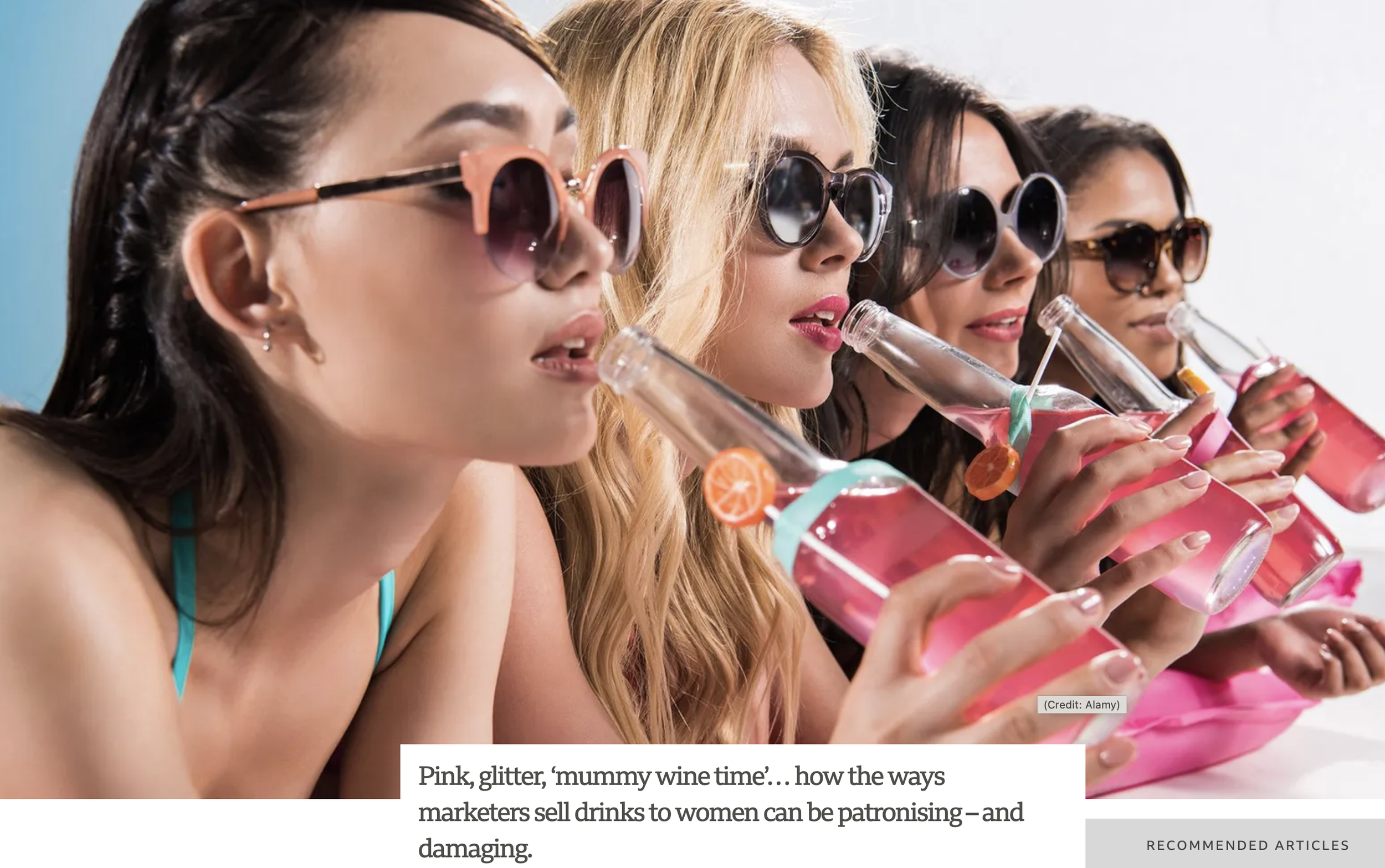
In 2020 I was interviewed for BBC Woman’s Hour for a piece on the Feminisation of Alcohol Marketing. I spoke to Dame Jenni Murray who is an absolute legend and consummate pro about Mummy Wine Time and the how the myth of alcohol being equated with self care had become the acceptable face of Alcohol Use Disorder.
Parenting and alcohol, in many ways, is still a taboo subject. To question the impact our drinking may be having on our kids is still linked in our heads to mother shaming, so it’s a tricky conversation. I believe that mums and parents need more support and absolutely NO SHAME, while at the same time being encouraged not to shy away from some of these uncomfortable questions.
The Guardian published an article in 2019 about the negative effect that parental drinking has on over a third of children. It said, ‘The Alcohol and Alcoholism Study, which examined the effects of non- dependent drinking states: “The children surveyed – who were aged between 10 and 17 – reported negative experiences that included being given less attention than usual, being put to bed earlier or later than their usual time, having arguments with parents more than normal, and being at the receiving end of increased unpredictability.”
This is the first article I have seen that looks at the impact of alcohol on children with non-dependent drinking parents as opposed to alcoholic parents. So, the shift is there. Mainstream society will take a while to catch up with this – and alcohol marketing and a lack of legislation has a lot to answer for – but we are in an exciting time of transition and the tide is turning.
Is alcohol a feminist issue?
I believe we have been sold a nicely packaged anaesthetic to the injustices of unequal pay, gender violence, unequal parenting responsibilities, overwhelm, and general inequality. If you look at the use of Valium, or ‘Mother’s Little Helper’ as it was called, in past decades it bears similarities to our hugely joked about ‘mummy wine time’.
Social scientists regard the use of Valium in the 1970s and 1980s as a rather sinister band-aid to deal with women’s stress and mental health issues during a period of social change for women. I wonder how this current period will be viewed by future generations when measured alongside soaring rates of death by alcoholic liver disease in women. Perhaps it won’t seem so funny then?
The recent revival of gin and the huge sell to women of pink gins, red fruit infused gins, and the‘Gin Mummy’culture is all rather ironic when we look at the history of gin. In the UK, our misuse of alcohol can be traced back to the 1700s with the gin epidemic, when pharmacists sold gin to soothe women’s ‘hysterics’ and keep them calm. This created huge problems of dependency, and gin earned its nickname of ‘mother’s ruin’ before radical changes were made to licensing laws. Interestingly, the connection between advocating alcohol-free living and feminism goes back to the 1800s, when temperance was advocated by suffragette groups to protect women from violence.
In every era, we have a version of the corset, a construct that keeps us controlled and compliant. In a way, wine is our corset. It shuts us up and damages us and, if we have a problem with it, it’s our fault. Alcohol is a feminist issue because it has been sold to us as the elixir of the modern, emancipated woman and yet it rids us of our power, keeps our ambition and self-esteem low – in short, it keeps us stuck. Let’s rip off our alcohol corsets and run wild, ladies!
Drink like a man, die like a woman
This heading is rather shocking, I know, but so are the stats. Part of the societal shift around alcohol in the late 80s/90s was that in order to be taken seriously by men, women had to drink like them, especially in the world of work. The business world of ‘success’ involved boardrooms, cigars and whiskey, cocaine and champagne. We moved from drinking pints with the lads and binge drinking, to ‘career woman’ drinking, a la Sex in the City. The ethos, especially in the 90s’ boom era of the media and creative industries, pushed this notion of work hard, play hard.
However, alcohol is a poison that is particularly harmful to the female body and we’re only just beginning to understand the extent of this. What is perhaps most shocking is that there was almost no research on the effects alcohol has on the female body before 1990! Can you believe that date? In a BBC article written by Marisa Taylor in June 2018, she quotes Sharon Wilsnack, a psychiatry and behavioural science professor at the University of North Dakota’s School of Medicine and Health Sciences, who said, ‘People just didn’t think about women. And to the extent that they did, they just assumed, well, you could study men and it could apply to women.’ Female bodies are so different to male bodies, so if that doesn’t stink of the patriarchy, I don’t know what does!
In addition, research shows that women’s drinking is tied to quelling emotional pain, while men’s drinking is more linked to social pressure. Heavy, but it rings true, doesn’t it? Part of being a modern feminist and being on the ‘transition team’ in terms of advocating sobriety as the new normal is asking questions and creating change. This is why models of support for sobriety for women are taking a rebrand, led by the women that have been failed by a system set up by men for men.
WOMEN AND ALCOHOL
Recent research on women and alcohol has produced some pretty eye-opening results7:
The rise of marketing alcohol to women and the changing of gender roles have gradually shifted the booze imbalance and women are now drinking nearly as much as men.
National data show that the cirrhosis death rate shot up by 57% among women aged 45–64 from 2000–2015 in the US, compared to 21% among men. And it rose 18% in women aged 25–44, despite decreasing by 10% among their male peers.
Women have an advanced biological vulnerability to problematic alcohol use because they produce smaller quantities of an enzyme called alcohol dehydrogenase (ADH), which is released in the liver and breaks down alcohol in the body.
Fat retains alcohol, while water helps disperse it. So, thanks to women’s naturally higher levels of body fat and lower levels of body water, women experience an even more dramatic physiological response to alcohol.
Women have a higher predisposition to disordered alcohol use due to the traditional caretaker role. This includes issues around:
– stress, fatigue, childcare– stigma of addiction for mothers
– fear of seeking help, which increases the risk of custodyand legal problems
not being able to find/pay for childcare to get support due to the financial disparity between men and women in the workplace
Women are also more likely to have a dual diagnosis than men – mental illness + problematic alcohol use, for example.
There is a very strong correlation between disordered eating and problematic alcohol use that is more prevalent in women.
Women experience liver disease and damage to their hearts and nerves as a result of drinking alcohol more quickly than men.
Women have a higher risk of breast cancer than men.
It’s not easy to read this, we know, but knowledge is power and evidence shows that you knowing the risks of drinking to you as a woman, and knowing some of the motivations behind women’s drinking, empowers your decision-making process.
Listen to the Full Episode of Woman’s Hour HERE.
Read the Full Article HERE: https://www.bbc.co.uk/worklife/article/20200924-the-feminisation-of-alcohol-marketing